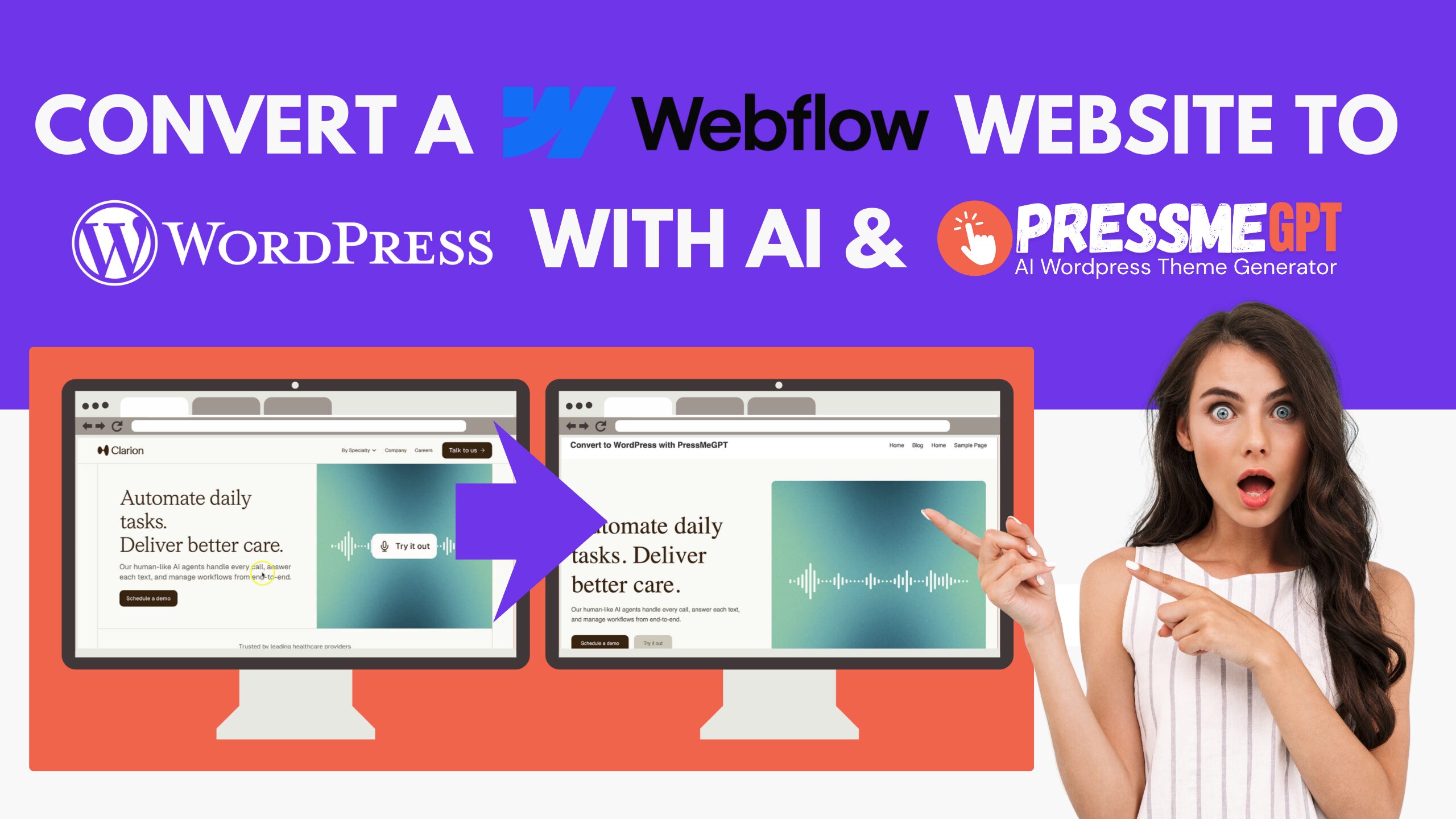
Webflow is a popular modern website builder that allows designers and developers to create visually impressive websites using a powerful visual editor. It combines design tools, hosting, CMS functionality, and animations into a single platform, making it a favorite among designers and agencies who want more control than traditional drag-and-drop builders.
Many startups, marketing teams, and creative professionals use Webflow to quickly launch marketing websites, landing pages, and brand experiences.
However, some website owners eventually decide they want to move their website from Webflow to WordPress.
WordPress is one of the most widely used website platforms in the world and powers more than forty percent of all websites. Over the past two decades, it has built a massive ecosystem of plugins, developers, agencies, and hosting providers.
In this video, we show how you can convert a website built with Webflow into a native WordPress theme using PressMeGPT.
PressMeGPT is an AI WordPress theme generator that allows you to convert existing websites into real WordPress themes in minutes. Instead of manually rebuilding your Webflow design, PressMeGPT analyzes the website and generates a theme that you can export and install into WordPress.
Why Some People Move From Webflow to WordPress
Webflow is a powerful platform for designing modern websites, but there are several reasons why someone might choose to migrate their website to WordPress.
Reducing Monthly Platform Fees
Many website builder platforms, including Webflow, operate on monthly subscription plans. While these plans provide convenience, businesses sometimes prefer to reduce ongoing platform costs.
WordPress allows you to host your website with nearly any hosting provider and maintain more control over your infrastructure and expenses.
Long-Term Stability
WordPress has been around for more than twenty years and remains one of the most stable and widely supported website platforms available.
Because of its popularity, there is an enormous global community of developers, freelancers, and agencies who specialize in WordPress.
This makes it easier to find help, maintain websites, and scale projects over time.
SEO Advantages
WordPress has long been considered one of the best platforms for search engine optimization.
It provides complete control over important SEO elements such as:
- Page structure
- Metadata and meta descriptions
- Schema markup
- URL structure
- XML sitemaps
There are also powerful SEO plugins available that make it easier to manage on-page and technical SEO.
Massive Plugin Ecosystem
One of WordPress’s biggest strengths is its plugin ecosystem.
Plugins allow you to extend your website with additional features such as:
- Contact forms
- eCommerce stores
- Membership systems
- Marketing automation tools
- Analytics integrations
- Advanced SEO features
This flexibility allows WordPress websites to grow and adapt as business needs evolve.
Changing Agencies or Developers
Another common reason businesses migrate away from website builders is when they change marketing agencies or web developers.
Many agencies prefer working with WordPress because it is widely understood and not tied to a single proprietary platform.
Moving a website to WordPress makes it easier for future developers to maintain and update the site.
The Traditional Way to Convert a Webflow Website to WordPress
Historically, converting a Webflow website into WordPress required manually rebuilding the entire site.
Developers would typically export the Webflow HTML and then convert that structure into WordPress theme files.
This process usually involved:
- Rebuilding the layout as WordPress templates
- Creating files like header.php and footer.php
- Configuring stylesheets and scripts
- Registering menus and widget areas
Depending on the complexity of the website, this process could take many hours or even days.
PressMeGPT simplifies this process by generating the WordPress theme automatically.
What PressMeGPT Is
PressMeGPT is an AI-powered WordPress theme generator designed to convert websites into native WordPress themes.
Instead of manually rebuilding a design, PressMeGPT analyzes the layout and structure of a website and generates a working WordPress theme.
The generated themes can be exported and installed on any WordPress website.
PressMeGPT supports several editing environments including:
- Gutenberg (WordPress Block Editor)
- Elementor
- WordPress Classic themes
Once exported, the theme belongs entirely to you and can be installed on as many websites as you like.
Benefits of Converting a Webflow Website With PressMeGPT
Using PressMeGPT to convert a Webflow website into WordPress offers several advantages.
Faster Development
Instead of rebuilding the entire design manually, PressMeGPT can generate a working theme in minutes.
Full Ownership
The exported theme is a standard WordPress theme file that you fully control and can host anywhere.
More Flexibility
Once the theme is installed in WordPress, you can extend your website using thousands of available plugins.
Easier Customization
You can refine the generated theme using prompts inside PressMeGPT before exporting the final result.
Step-by-Step: Convert a Webflow Website to WordPress
Step 1: Visit PressMeGPT
Start by visiting PressMeGPT.com.
Create a free account or sign in if you already have one.
Once logged in, you will gain access to the PressMeGPT dashboard where you can begin creating new themes.
Step 2: Create a New Project
Inside the dashboard:
- Click New Project
PressMeGPT allows you to generate themes from:
- Text descriptions
- Design references
- Existing websites
To convert a Webflow website, choose the option to generate a theme from an existing website.
Step 3: Paste the Webflow Website URL
If your Webflow site is published online, copy the public URL of the website.
Paste the URL into the project field inside PressMeGPT.
PressMeGPT will analyze the layout, styling, and structure of the website so it can recreate the design as a WordPress theme.
Step 4: Add Optional Instructions
You can provide additional instructions to guide the theme generation.
Examples include:
- Maintain specific layout sections
- Improve mobile responsiveness
- Ensure compatibility with Gutenberg
- Ensure compatibility with Elementor
These instructions help the AI produce a theme that better matches your needs.
Step 5: Generate the Theme
Click Generate Theme.
PressMeGPT will begin converting the Webflow website into a WordPress theme.
Behind the scenes, the system generates:
- WordPress template files
- Stylesheets
- Theme configuration files
Within moments, the base WordPress theme will be ready.
Step 6: Refine the Theme With Prompts
After the theme is generated, you can refine it using prompts.
For example, you can ask PressMeGPT to:
- Adjust spacing
- Modify layout sections
- Change fonts and typography
- Add additional components
Many users complete a full theme within 30 to 45 minutes using this workflow.
Step 7: Export the WordPress Theme
Once the theme looks the way you want, export it.
PressMeGPT provides the theme as a downloadable WordPress theme file.
This file contains everything needed to install the theme into WordPress.
Step 8: Install the Theme in WordPress
Log into your WordPress dashboard.
Then follow these steps:
- Go to Appearance → Themes
- Click Add New
- Select Upload Theme
- Upload the theme file exported from PressMeGPT
After installation you can preview or activate the theme.
Your Webflow design will now function as a WordPress website.
Gutenberg, Elementor, and Classic Theme Options
PressMeGPT supports several WordPress editing environments.
Gutenberg
The Gutenberg export option works with the WordPress block editor that is built directly into WordPress.
Elementor
The Elementor export option works with the Elementor page builder, which provides visual drag-and-drop editing.
Classic WordPress Themes
The Classic theme option generates a traditional WordPress theme structure preferred by many developers.
This flexibility allows you to choose the workflow that best fits your needs.
Who This Workflow Is Useful For
Converting Webflow websites into WordPress themes can benefit many types of users.
Startup Founders
Move marketing sites from Webflow into a long-term CMS platform.
Freelancers
Convert Webflow designs into WordPress websites for clients.
Agencies
Reduce development time when migrating websites from modern builders.
Developers
Turn design prototypes into fully functional WordPress themes.
Try PressMeGPT
If you want to convert a Webflow website into WordPress, you can create a free account at PressMeGPT.com.
The platform allows you to:
- Generate WordPress themes from existing websites
- Refine designs using AI prompts
- Export fully functional WordPress themes
Whether you are migrating from Webflow, redesigning a site, or experimenting with new workflows, PressMeGPT can dramatically speed up WordPress theme creation.
Conclusion
Webflow is a powerful modern website builder that allows designers and developers to create visually impressive websites quickly.
However, some businesses eventually prefer the flexibility, ownership, and long-term stability that WordPress provides.
PressMeGPT makes it possible to convert a Webflow website into a native WordPress theme in minutes.
By entering the website URL, generating the theme, refining the design, and exporting the final result, you can quickly move from a Webflow-built website to a fully functional WordPress site.
Visit PressMeGPT.com to try it yourself and start converting Webflow websites into WordPress themes today.